24 February 2006

more random thoughts on the matter

after talking to mr. j. barabas last night, i realized that maybe i should clarify my argument. i'm not saying that there should be an absence of theory... i'm more saying that there should be less of an emphasis on it. and i feel that this has been said over and over again by various people. there should be theory with method. no just method. no just theory. and people should stop being told that one is more valuable than the other... that you're "smarter" if you're all theory.

action! it's all about action. experience your experiences... don't just listen to other people talk about their experience, or worse yet... listening to other people theorize about experiences they didn't even have.

coming back to my own experiences...

i really hate it when i hear people saying "oh... you must be talented" after seeing my drawings or my art. no no NO! i've been devoting a large portion of my life to doing this since i decisively made a choice to do so when i was around 4 or 5 years old. everyone has the potential to do it. the only way you get good is by actually doing it. i do it because i care about it. i do it because i can't live without doing it. i'm only (somewhat) good at it because i do it.

so stop thinking that you can't do things.
go out and do them
everyone sucks at the beginning
it's just easier to get away with sucking at things if you're a kid.

sometimes i think that the smartest people of all are the ones who just shut up and get done what needs to get done. the people who always have a knack for figuring out the right thing to do. maybe it's all just a matter of listening.

23 February 2006

chautauqua

so my coffee mug is sitting here perilously close to my laptop, but i'm attempting to have faith that my desk isn't as messy as it really is and that i'm not a complete klutz. maybe these are bad things to have faith in.

either way, i've realized that i should write in this more (instead of only writing it down and never showing anyone). hm. so here it goes -- several days' worth of me writing in my notebook.

------


"information is semantic in nature" -- thing knowledge (p. 68)

*semantic - of or relating to meaning (esp. language)
*epistemic - of or relating to knowledge


so where does this go? i'm not sure. i've been trying to grasp the whole connotation of semantics and epistemics and the ologies of them both. coming at theory from a hands-on standpoint is hard, but doable, i think.

i've discovered that i really like reading about art history and the theory of art and aesthetics. and when i say reading, i don't mean lazily flipping the pages, staring at pictures. no no. it's more reading, as in arguing my own view along the way and sometimes changing stance in lieu of new information or a new way of thinking of things. (and i definitely don't think reading about art is a waste of time if you're an engineer... but maybe that is a different argument altogether and should be saved for a different day)

anyway. i was reading this book about kandinsky (the "inventor" of abstract painting) (ISBN 0-517-64793-1, in case you were wondering) the other day and ran across this quote:
"like many another artist at the turn of the century, kandinsky was a prolific writer." and that's the beginning of all of this. a nucleation point, if you will, of things that have been floating around in my head for a few weeks.

"poets, philosophers, academicians, scholars, and critics routinely issued their analyses and pronouncements on the contemporary artistic scene, but always from the perspective of someone not himself directly involved in the pictoral process."

in other words, writers of criticism/critique wrote about the works of others. producer of media and theoretician of media are separate.

"for the artist, understandably, the effect was to make him wish to resume control of his own destiny, so that he felt an increasing obligation to take responsibility not only for his creative activities but also for the reception of his work by the public. he was forced into the position of becoming a writer himself."

the artist feels a loss of control over how his works are viewed because the artist isn't the one writing about his own experience -- an experience that takes place in a space that may or may not originally be thought out in words.

"[...] it became difficult, if not actually impossible, for the artist to explain himself through a third party. if he were not to be misunderstood -- or willfully misrepresented -- he had to take the risk of entering the lists as a theoretician on his own behalf. for kandinsky, the forming of images had to work hand in hand with the formulation of ideas."

kandinsky's action to take responsibility for his own theories says something important. he realized that art and words (mostly) exist in two different worlds; art cannot stand on its own -- at least because people don't know how to read it. if we were trained in reading art -- something that i think comes in part from producing some form of art -- then it's easier to interpret (to a closer extent) what someone else is trying to accomplish. this is simply things vs. words.

"necessary allies, the two processes [writing and painting] complement each other in pursuit of greater clarity."

"yet they are far from being interchangeable. the words do not provide a key to the images, nor do they set out a programme which the images proceed to illustrate"

the object -- in this case kandinsky's art -- "says" things that theory alone cannot. they must exist together. the paintings have some knowledge inherent to them that's more than theory -- something wordless and immeasurable. something that can only be grasped through seeing the work. from this, i would venture to say that kandinsky realized that there are things in art that are inherently wordless. also, that during the production of a work of art, most of the communication between creator and medium happens in this wordless place. because kandinsky knew that the grammar of art was not enough to describe his goals, he tried to use the language of music to describe his work.

"'music has a grammar,' he wrote, 'a grammar which, like any living thing, changes over long periods of time, and yet can always usefully be referred to, much in the way you consult a dictionary ...'"

i say that a lot of music's grammar is determined by the materials -- instruments and performers -- involved. and that the act of performing a piece changes the way subsequent pieces are produced and performed. because materials and people change over time, music and the grammar of music has changed.

"kandinsky was first and foremost a painter, and one cannot look at what he wrote without bearing that in mind. the theoretician cannot be regarded in isolation from the artist. in the last analysis, the writing is only a secondary response to the primary matter of painting. kandinsky's texts must be read, therefore, as attempted rationalizations, both as tentative and as contradictory as the progress of the work itself, valuable only in so far as they ar a record of his determination to spell out a truth about painting."

yes! the painting exists before any concrete thoughts about the recently produced painting are formed. material precedes theory. practice precedes theory. writing is secondary to the work. this lends credence to the thought that there is a knowledge that can be gained only through the experience of producing something, and that although we (as a culture) put a higher value on theory, theory cannot exist without these objects coming first. thus, through theory and words, we are only verbalizing what was already inherently present in the material and our production of an object. or maybe it's more that hte object is a manifestation of the change that has taken place through the experience of ecreation, and that this change -- of materials and of the creator -- is something that has taken place outside of words. it's a silent understanding between material and creator ... a compromise and a conversation.

this is what i mean when i say that a creator has to listen to the materials. there's an understanding -- a physical understanding -- that's transferred without words: the feel of the pen on the paper, the strength of the material, the flow of water and paint on a canvas, the feel of metal bending into shape ... it all adds up to a whole greater than the creator's original vision.

"he [kandinsky] was already losing interest in reality and the natural world, which made so little impression on him that his whole concentration was focused on the surprising forms assumed by the thick pigments, modelled under the broad strokes of his palette knife."

i would argue that kandinsky discovered the wordless communication of the medium (in his case, paint) and became enamored with it... wanted to explore it, and it alone. that in forgoing the attempt of representing the "real world," he discovered communicating the process of creating -- communicating the subjectivity of creation... the state of mind whilst painting, the paint under his palette knife moving in its own way according to laws of physics that are still only somewhat understood, etc. and he felt that since he alone was there for the entire experience of creation, he was the only one who was able to truly attempt to put this experience into words -- hence, his writing and theoretizing about his own work. he felt the quiet mystery of wordless communication in creation and sought to vocalize and rationalize it. but his writing still cannot stand separate from his work. so much is communicated in this wordless world that it's impossible to communicate everything with words. this is one reason that i think the only way to truly understand something is to do it yourself.

the conversation between creator and materials is then embodied physically in the creator and the material -- both have changed after this process. i think sartre agrees with this in some respect :

"when we speak of a canvas of picasso, we never say that it is arbitrary; we understand quite wll that he was making himself what he is at the very time he was painting, that the ensemble of his work is embodied in his life" (sartre, jean-paul. existentialism and human emotions. 1987. p43).

this speaks to the change of the creator and, i think, ties to how this change is also embodied in the work. the works are relics of constant change. i would also propose to argue that even though kandinsky forewent depicting "real life" that his creations depict reality -- but in his case, the reality of the materials and the reality of subjectivity and experience. the reality of the creator without words instead of the readily observable reality.

and i think it's this point that draws contention. people are wont to believe in what can be measured and observed. moreover, people want to disbelieve and discredit the subjective, even though (i believe) most of our thoughts are composed from wordless knowledge and not theorized words. but the subjective is real; people just want to be able to ascribe predictability and rules to all things. anything that cannot be given rules and put aside in a little marked bin is "not scientific" or "not rational." if this is their argument, then their "rationality" is flawed.

if experience could be transferred completely with words, then there would be no need to distinguish who does what work. reading a book on something would make anyone an expert. but reading a book on someone does not make you an expert. no one will argue with this. if all knowledge could be transferred in words or in images, then there would be no use for experience. but our world is experience driven. experience has a marketable value. therefore, we shouldn't try to substitute theory for experience. experience has no substitute.

gundela (one of my housemates) says i should clarify a few of my points. the main one being, how much the creator's original vision comes into play when designing something.

it would be wrong to say that it's one way or another -- process or goal. more likely, it's a continuous spectrum. i would also venture to say that no design process is completely goal driven. maybe in the simplest and most abstract form... yes... but not in how the design is carried out. something can only be 100% goal driven if the designer/creator completely understands the materials and the method, and even then, there are so many possibilities, that something will be different than planned. so 100% goal-driven is not a possibility. likewise, 100% process is also unrealistic. something had to set you about making something. even if that goal is to explore the process, it's still a goal.

so i would say that there's a spectrum from pure process to pure goal with the ends being theoretic limits. the majority would lie somewhere in the middle. abstract art on the process side, and engineering design more on the goal side.

so what does all this mean? well... first, that i think people who identify as artists are more likely to understand how the material has a play in design -- particulary sculptors and wood workers. and i think that the more experience someone has with materials, the more able they are to choose which materials/media should be used to get done what they need to get done (if they have a goal). from this, i would say that engineers should also understand materials. engineers who are familiar with materials are more able to design a stable and useful (if useful is what is wanted) structure/mechanism/etc.

so i think it's imperative that all people understand materials, because materials surround us. and i believe that the only way to do this is to work with a variety of materials that are readily available.

i once read somewhere that "engineering is making what you want with what you have," and i think that this statement holds a lot of truth. to me, this means that an engineer needs to understand the materials in order to arrive at a design that satisfies the design constraints while also satisfying material constraints. the engineer should understand the material enough to use the materials properties (both strengths and "weaknesses") in positive ways. like i mentioned before -- using the wire's flexibility as a way to make it stronger for larger structures.

i also think that it speaks to the fact that engineers -- people in general, really -- would create better, more locally customized and sustainable design if they understood the materials surrounding them. and everyone would benefit. maybe this is overly idealistic. but, really, people should explore their worlds and should feel comfortable taking everything that's around them and using it for their own means. appropriation. it's all about appropriation. and somehow, i think, appropriation is all about confidence and comfort.

18 February 2006

09 February 2006

really, i'm not a crazy engineer.

so it's thursday. classes have started, and i'm so happy to be going to them. i think they'll be very good for me this term. i almost feel like i've become a real and somewhat (more) responsible person.

class 1: special topics in cinematic storytelling with glorianna davenport. first day of class, we got to tell a story. the reading list is good. the people in the class are a nice mix. and glorianna looks so happy to teach. it's her last time, she says. so i guess it's good that i get a chance to take this.

class 2: media theories and methods II with henry jenkins. henry is awesome. the class dynamic is strong. there are lots of good discussions that go on. the reading list is also awesome.

-----------------------------------------------

"The simulacrum is never that which conceals the truth -- it is the truth which conceals that there is none. The simulacrum is true." -- from Jean Baudrillard, Selected Writings, ed. Mark Poster (Stanford; Stanford University Press, 1988).

first week of class, and i'm sure i have some thoughts to go along with it. i've been reading about fair use and american copyright law and i keep getting angrier about the state of things. i'm tempted to agree with baudrillard's argument of the simulation of freedom... the simulacrum. i also started reading "thing knowledge." am gonna read some foucault and some more dewey. maybe i've discovered my hidden love for philosophy. maybe i've discovered that i actually care about the state of things than i thought i did. maybe i'm getting over my skepticism and cynicism and am actually trying to do something about it, because anyone can sit around and wank about how things suck and about how they used to be so much better back in the day. words are cheap and thoughtful actions are rare.

maybe sometimes it's better to start doing something and to try and remain confident that you can figure things out along the way. it's better to be confident in your abilities than to be confident in your ability to predict the future.

anyway. back to that whole doing stuff thing.

i started building some dancing flowers. simple. made out of scraps of stuff i had around as an exercise in mechanisms and building stuff with wire. i don't think there's much better of a way for me to do this other than me doing this. it feels like working with the material speaks so much more than i could ever theorize. in some way, it's nice to give up control in favor of something that would work better with the material. i don't know if that statement made any sense. basically... i can only plan so much before building something. after that, everything has to come from experience. i'm not old enough to have the design experience of a mature engineer, but i'm flexible enough to admit that i don't. and i'm flexible enough to admit that sometimes the material knows (in a sense) more than i do.

maybe i sound crazy when i say this, but i think it's an engineer's job to listen to the materials and the situation and to be willing to admit that their planning is sometimes not enough. it's not an engineer's job to forcefully work out a situation. there has to be elegance and grace. in particular when working with nature or trying to create a certain motion.

does that make sense? i realize that sometimes i ramble and that sometimes things make sense to me when in reality i'm leaving out a bunch of explaining.

maybe i should expand on that.

too long, engineers and industry in general has tried to forceably make what they want to have happen instead of finding the best solution with the materials available. this leads to excess and over engineering and a whole host of other things. i can't see technology without any sort of philosophy or ethics or art, and i don't know why it's not taught as being inextricably tied together. i also hate the way people put themselves above nature. the world was here before us and the world will be here after us. it's prideful and foolish to even pretend that we can predict and control things. what we CAN do, though, is listen to the situations... to the materials involved. instead of trying to find the best materials from the farthest away to create the "perfect" model of something, we can find local materials and create the most effective local model.

for me right now, i have a lot of wire around.
its strength is its flexibility
its strength is also its weakness... i.e. it's hard to build larger structures out of it
but if you use its strength as a solution to its weakness (by wrapping lots of wire together in certain manners and soldering/welding in key spots), you can end up with a pretty stable structure.

this solution comes from simply listening to the material and using its strength.
likewise, the same should be done for other materials.

21 January 2006

i hope i don't offend anyone with this

So i'm eavesdropping on this conversation to my right. A circle of people who talk about nothing like it's a big idea and who continuously pat themselves on the back for even talking about these things. Generalities without meanings. And i'm finding that the more i hear, the more i hate everything they're saying. It's one woman in particular. She's discussing with some school representatives about them having prom and homecoming dances. More specifically, she's disagreeing with them about letting the kids have these dances (the school didn't originally have them). Granted... as much as i hated school dances, i think that if the kids want them and if they are willing to go through the process of organizing things, then they should be allowed to have it. The woman from the school claims (and i agree... with my own thoughts that will be added later) that the process of organizing and figuring out things can be a learning experience. The woman in the crowd (if a crowd is three people) countered that this process of figuring out and organizing the dance takes away from the kids' valuable time when they could be learning other things and that the learning experience involved in such an activity would be all of five minutes. I figured since their words illicited such a strong reaction from myself that i should examine why it is that i feel strongly and exactly what it is that i'm respoding to.


First off, the way that the woman in the crowd talked rubbed me the wrong way. She was saying things like they were 100% the truth because she's a teacher and she knows what these kids need blah blah blah blah. Stereotypical in some sense. I felt that she was speaking with false authority and with false pretenses. Someone regurgitating what they've always done because that's just the way it is... someone i don't feel has put enough of the right thought into what she was saying. To use Seymour's words, someone making excuses for the QWERTY keyboard even when the real reasons have long since gone. I find that when anyone speaks like that, i immidiately take offense. What gives her the right to dictate from high what the kids do or don't want or need? I hate this tone of voice mainly because it implies that there is a clear right or wrong and that one person alone can know “what's best” and that it's their duty to make sure everyone else is convinced that their way is right.


I truly and honestly believe that, just like the design process, there is not only one solution. Different solutions work better in different situations. It's not our job to duplicate... to replicate... to unthinkingly create something mechanical... to push kids through one mold. It's our job to figure out how each individual thinks, how they learn... to figure out what they're good at and what they care about and to help them incorporate useful skills into what they already know. To aid in their own personal appropriation of knowledge.


Building on this, why can't the organization of a school dance be something just as learning rich... possibly even more rich... as what's considered a more traditional route? If it's claimed otherwise, then the claimant (claimee?) is not thinking... not dreaming... not pushing. everything is a learning experience. Just think of what a school dance could be if people dreamed more about them instead of simply trying to recreate last year's dance with a new theme. There's no reason why technology couldn't be integrated. Movement. Robotics. Sensors. Documentation. Story telling via blog/DV... etc. And with a simple desire for a dance, a more meaningful experience could be created. But most importantly, it was something the kids themselves created from their own desires. The results of that experience cannot be measured. Confidence. Creativity. Self-esteem. Things that are immeasurable and that lead to more in-depth and more meaningful learning.


I guess I just can't see why people think that they have any right to say that one way is best, that there's only one mold, that there's only one path to take. Why is what you do more meaningful than what i do or what someone else does? It's not.


I got into an argument with one of my friends the other day about originality. They were arguing that if people take the viewpoint that no act is original, then there's no purpose to live for. (they were arguing that everything was original.) My argument is that no act is original (at least not when you break it down into the simplest concept of what that action is), it's just that every human is a sum of so many experiences and choices, that the order in which they happen (if they happen) and the way that they happen is original for every single human. Our gestures may not be unique, but our whole selves are. It's not right to try to force an experience on someone because they might not be in the right place for that. Maybe their path in life has been so vastly different from your own that you cannot make sense to them. But nothing gives you the right to say that your own personal path is the only right way to go, simply because you think so highly of yourself that you think you turned out whole, complete, and ok. Life is a process that all ends in the same goal, and every process is different. Every process should be allowed to be different.

(david says i can't change everyone)

17 January 2006

ganson/kinetic sculptures/other thoughts

last thursday, i met with arthur ganson to discuss my work and his work and things in general. it was pretty awesome.

i'd be lying if i said that arthur ganson's work hadn't influenced my own work. i remember the first time i went to the MIT museum (about four years ago) and saw ganson's permanent exhibit there. i was awed and excited. something about the pieces captured my imagination and opened a world to me that i never knew was possible. that was the engineering i always dreamed about. there was mechanical logic out in the open. there was the (to use ganson's words) sensuality of machines. something there was mystical and playful. and i loved it.

my undergrad mechE senior thesis (the icarus machine: a kinetic sculpture that demonstrates the principle of gyroscopic precession) was inspired by ganson (and also elizabeth streb and robert m. pirsig's book zen and the art of motorcycle maintenance). other than my inspirations, my thesis was fueled by the fact that i took an entire class that focused mainly on gyroscopic motion and was still clueless when it came to intuition about how they actually worked. i thought that by working through the design process, that i might come to a more clear understanding of what was going on.

over half a year since i finished my thesis, and i don't know that my intuition about gyroscopes is really superb, but it's definitely better than it was. but i think most importantly the process of working on my thesis has shaped the course of where i am and where i'm going in my life.

which somehow (at least in my head this makes logical sense) leads to my meeting with arthur ganson. i had lots of questions for him, but somehow the answers to the pre-thought questions weren't that important (although, he did patiently answer everything i asked). for me, what was more meaningful and rich was the conversation that went on between and through the questions. so i'll try to go over the questions and answers and fill in in between what i remember but didn't quite write down, as well as add a bit of my own post-meeting thinking. [the beginning questions in quotes are what i asked him]

-- "why 'gestural engineering' as a name for your exhibit at the museum?"
the museum folk are the ones who came up with this name. gesture is tied clearly to what ganson is doing. as he explained to me, "gesture is our emotional response to motion." i very much agree with that statement... or what it implies. maybe it should be more clearly stated that the gesture of a motion produces an emotional response. for me, the mention of gesture brings my thoughts to milan kundera's book immortality. in this book, kundera opens with a gesture that an old woman makes as she gets out of a public swimming pool. kundera discusses how this gesture belongs to a twenty year old girl and how gestures are not unique -- there are few gestures and many people. this thought fits with my view of the engineering design process, i.e. there are a set number of things to get done... motions to make... and many ways to do it.

-- "what is your design process?"
in general, the process is started by thinking about the type of motion that the final machine will make, then thinking about the possible mechanisms that can produce that motion. sometimes (as with the artichoke petal), the object works as a catalyst to start the design process. and yet other times, the idea is more nebulous, e.g. the fragile machine ... "its presence is its gesture." the mechanics of the machine is directly connected with how something will work and with the materials that will be used. this makes sense to me. to get a desired presence, a desired gesture, it's important to understand materials and the different uses of them. every material has its plusses and its drawbacks. for example, some materials allow for ease of construction, but offer little ability to scale to large size (lego is one case of this). so when the gesture is decided upon, it also follows that a certain set of materials will soon be decided upon. delicate gestures require delicate materials, etc.

-- "what resources do you use for mechanism design?"
mostly, he just sits, ponders, dreams, and draws. the more you work on this, the more your intuition about what might be a good solution grows. in the case of the large scale chair that disassembles and comes back together, arthur consulted an old book of mechanisms that he had and found a great solution (the beaver tail cam). i don't know that i could describe that solution here... it was something i didn't understand until moving the actual mechanism and figuring out what it was doing.

-- "what inspires you? what's your goal?"
he's inspired by anything around him and by nature (which... i guess is something around him). his goal is to explore different worlds. the machine is a game. the goal is to always keep playing. i agree with this. by making a problem into play, you eliminate the ingrained worries of is this right or wrong. instead, you focus on trial and debugging until you get what you want... or at least the closest you can get within your time constraints.

-- "what do you use for the base of your sculptures?"
a lot of times the base is incorporated. a good material is MDF (medium density fiberboard). he likes it for its lack of grain and its ability to accept stain. on top of the dye, he adds a wax coat to protect the wood. after researching MDF on the internet and just as a note, MDF should be worked with in high ventilation and with a face mask because it's bonded with urea formaldehyde which is not good to inhale from the dust.

-- "any advice for me?"
work through the difficult parts. don't give up.

-- "where do you find your materials? are they new or reused?"
he used to use stuff from junkyards, but now everything's from scratch, because it allows for more precise mechanism design. this makes sense. sometimes, it's hard to match gears to found gears or to fit found machinery together. lately, the only time found objects are used are as the focus of a sculpture.

-- "why do you think your stuff resonates with people?"
"i'm lucky." everybody's a sucker for motion, toys, puppets, and inventions. everyone's reason for liking it is personal. he says his pieces are relics of a play process. there's nothing there to get. he's not trying to sell anything. arthur told me a story of an exhibit where everyone was praising him afterwards and someone came up and said "i don't get it. i don't like it." and he was happy that they did so. i'm definitely of the opinion that dissent is good. sometimes dissent leads to more thorough questioning and a more rich dialog than agreeing and glossing over your thoughts.

-- "how did you get here?"
accidentally. he was a pre-med major. he used to be obsessed with programming for a year or so. and he always loved building things. he feels lucky that he's able to make a living doing what he loves. i couldn't agree more with the feeling of accident. i usually feel like i have no clue how i ended up what i'm doing now, but i'm so thrilled to be here that i don't question it.

-- "how would you get people to follow in your steps?"
"i wouldn't want people to follow in my steps." he says that people should figure out what the natural steps are for themselves. keep checking in on what feels important and interesting to you. go with what feels right.

-- "what's hard and what's easy?"
"it's easy to keep dreaming; hard to stop." everything feels like a prototype. there's always something more you wish you could tweak on it, so it's hard to know when to finish. also, it's hard to come up with a solution to a problem that someone else needs a solution for. i can definitely identify with this.


all in all, i really enjoyed meeting with arthur ganson. he's a pretty cool guy. in some ways, i feel that we have very similar outlooks on things. for me, it's really nice to see someone who's doing what they love (and something similar to what i would maybe like to do some day) and making a living doing it. it's definitely an inspiration for me to have him around and for him to be so willing to patiently answer my questions.

16 January 2006

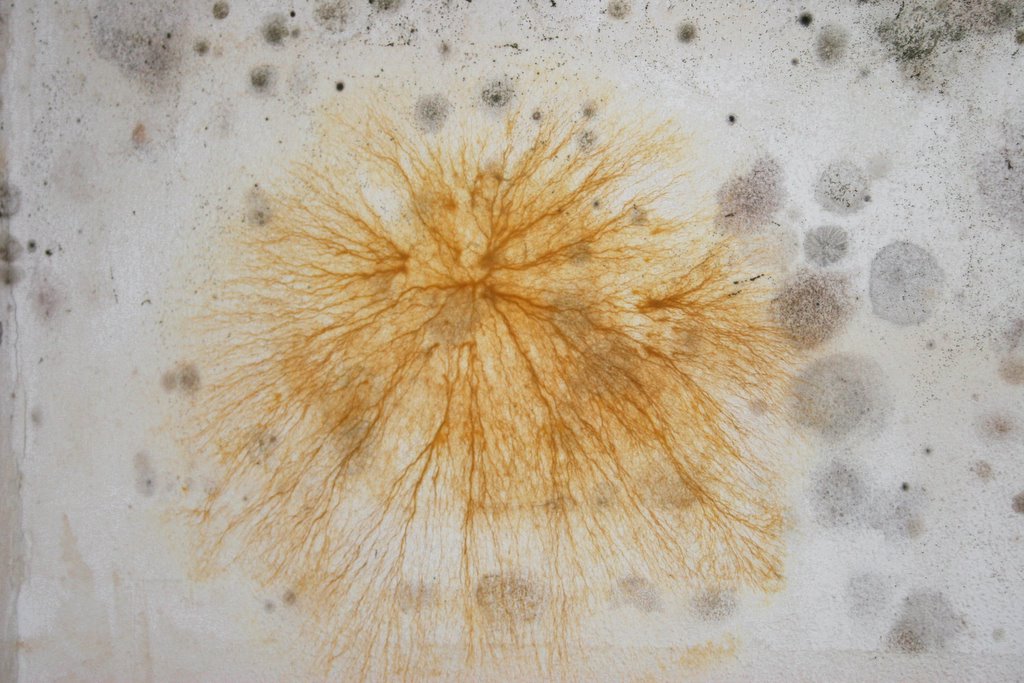
complete with a picture of real new orleans mold!


so i'm going to new orleans this coming thursday with a group of people to the new orleans making it happen conference. we're meeting tomorrow to discuss what we will present and how we will attempt to engage the audience in our thoughts on rebuilding the schools. i've never been to a conference of any sort, much less one back in louisiana trying to discuss how we think the schools should be rebuilt. i'm a little nervous and a little excited. i hope it goes well. only a few more days for preparation.

15 January 2006

a holiday in my head


starting the new year off with a blast of inspiration and energy. it's great.

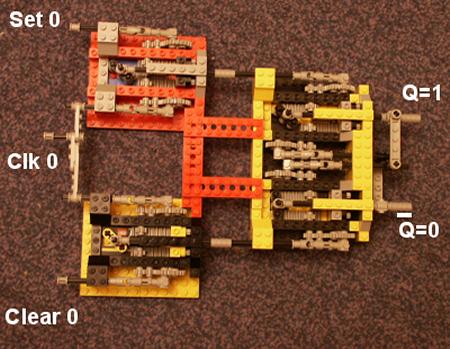
for one, this site blew me away. i guess it never really struck me to view logic gates as a mechanism... but it's logical... just like logic gates? hmm. maybe i should just stop my rambling there. or maybe not. i'm tempted to try to figure out my own (cheap and non-lego) versions of these things, just as a simple exercise in mechanism design. i'm sure i could make at least one of these out of things i have around my room. maybe. assuming i bring my tools up from the second floor to my room. and maybe i should charge my drill.


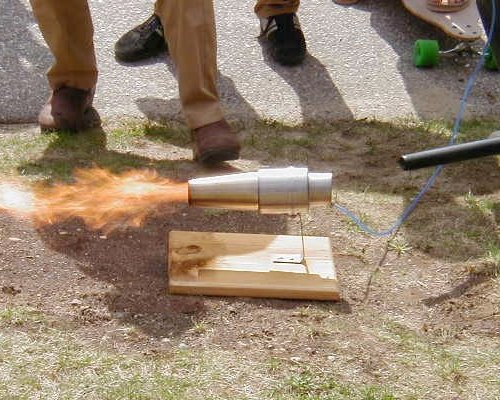
ok. so on top of lego logic, what else am i excited about? well... this is also pretty awesome. i'm really tempted to try to build one of these, too. in all my copious spare time. ha. ha. seriously, though. two cheap stainless steel coffee mugs + sink strainer + some other parts (z.B. JB weld, fuel nozzle, fuel of some sort, and a source of inflow) = ramjet awesomeness. maybe this is more of a summer project. i don't think this would work so well firing up in my room with my lovely wooden floors. (by the way, that picture is from the website that is linked to above.)


oh so many more things! the one thing i'm most excited about, though, is this woman who works with art students to reclaim abandoned robotic animals and to basically reprogram them and make them able to travel more easily (she does more than that as well). her name is natalie jeremijenko and she teaches at the visual arts department at UCSD (she used to teach in yale's mechE dept). in vol. 02 of make magazine, one of her statements really struck me --"we need to rethink toys. most of them are not truly engaging and have a very limited ability to teach us anything about the world we live in." i couldn't agree more.

03 November 2005

oh man!

a blog! for me and my work! oh boy!